Found a stray cat? How to tell if it is lost, and what to do first

A cat sits on your porch step. It looks at you. It has no collar. Is it lost? Is it hungry? Does it belong to a neighbour? You want to help, and you want to do the right thing. This guide shows how to read the clues and what to do next.
This guide is one step in our complete guide on what to do if your pet is lost, for owners and for finders.
This page gives general information. It is not veterinary or legal advice. Rules on found animals differ by area. If the cat is hurt or ill, call a vet or a rescue now.
First: is the cat hurt?
If the cat is injured, thin or very ill, take it to a vet clinic, shelter or rescue soon. Call first to check they are open.
Use care. Humane World says that even friendly cats can lash out when held. It advises bite-resistant gloves with an unfamiliar cat. For a cat that will not let you near, it says to borrow a humane trap and not to use your hands.
The cat may be neither lost nor abandoned
Humane World opens with a key point. The cat may be an owned pet that goes outside. It may be a lost pet. It may be abandoned. Or it may be a community cat, which lives outdoors and has caretakers or none.
So do not rush to take the cat away. Look first.
Read the status clues
Humane World lists four clues:
- A collar. A collar suggests a lost pet or a pet on a neighbourhood outing. If it has ID, try to call the owner.
- A tipped or notched ear. This means the cat was neutered as part of a community cat programme. A cat in good shape with a tipped ear probably has caretakers nearby.
- A microchip. You need a scanner to check. See below.
- Body condition. A healthy cat that visits now and then is probably fed elsewhere.
Also look at how the cat acts. Humane World says a friendly cat is more likely to be a pet, or a lost or abandoned cat. An unsocialised cat is more likely a community cat. It says a cat is probably feral if it stays unapproachable and cannot be touched after several days of feeding.
Do not rely on this alone. Humane World cautions that some pets are shy, and some community cats are friendly.
Get a microchip scan
This is the step that can end the search. Humane World explains the facts:
- A microchip is a tiny transponder, about the size of a grain of rice, under the skin.
- It holds an ID number. It is not a GPS tracker.
- A scanner reads the number. Only shelters, animal services and some clinics usually have one.
- A clinic or shelter can call the chip registry to reach the owner. Anyone can use the AAHA online lookup tool, which searches major registries.
- Scans can be missed if staff do not use the scanner well. Ask for a careful scan.
If you can safely contain the cat, take it to a vet clinic or shelter. Humane World says you can also ask a local rescue if you can borrow a scanner. Call first to check that they can scan.
Find the owner
Humane World lists these steps:
- Ask around. Talk to neighbours, mail carriers and people who walk the area. Ask who knows the cat, or who feeds community cats.
- File a found report with local shelters. An owner may have filed a lost report that matches.
- Put a breakaway collar on a friendly cat, with a note asking the owner to contact you. Humane World links a paper template.
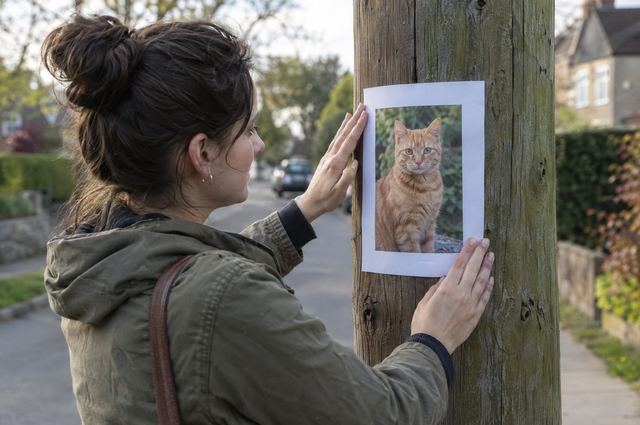
- Post flyers. Look for signs of care, such as bowls, shelters or other cats. Leave a note at nearby homes.
- Post online. Use Nextdoor, FrontPorch and local lost-and-found pet groups.
Use a clear photo and a short description. Say where and when you found the cat. Keep one detail back, so you can check a caller’s claim. Our guide to a lost cat flyer shows what to put on the page.
The ASPCA also says to check local rules. Ask whether you must file a found-animal report or give notice to animal control or your shelter.
Should the cat go to the shelter?
Humane World says the long-standing advice to take found cats to a shelter may not be best for the cat or for shelter resources. It says cats are more likely to be reunited with their owners if they stay out of the shelter system.
That does not mean you must keep the cat. It means you should scan the cat, call your local shelter for advice, and file a found report. Ask the shelter what it prefers. Rules and capacity differ.
What you can do, by case
Humane World gives next steps for each case:
- A lost pet. If the cat is scared and runs from its owners, read the guide to trapping a lost cat.
- A free-roaming pet. Gently suggest the owners keep the cat indoors. Share information on catios. If the cat is not neutered, share local spay and neuter programmes.
- A neutered community cat. Support the caretakers. Donate food, build a winter shelter, or feed the cat when they are away.
- A community cat that is not neutered. Help so the cat can be neutered and vaccinated.
If no owner appears
Humane World says:
- A friendly cat. Ask local shelters and rescues to vet the cat and place it for adoption. If shelters are full, think about fostering until an adopter is found.
- An unfriendly cat. It is unlikely to become an indoor pet. Use trap-neuter-return, with neighbours’ help, in the cat’s home area. Set up a safe feeding spot and, if needed, a winter shelter.
If you keep the cat, take it to a vet. Ask for a health check, tests and vaccines.
What about kittens?
The ASPCA says not to assume kittens are abandoned. The mother may be out finding food, or waiting for you to go. It advises:
- Take ill or hurt kittens to a shelter, rescue or vet clinic soon. Call first.
- Otherwise, leave the kittens where they are, and check back for a few hours to see if the mother returns.
- If you worry about their safety, move them to a nearby safe spot where she can still find them.
- Once kittens eat wet food by themselves, at about 4 to 5 weeks old, they can come in for foster care.
- Kittens that are dirty, thin and crying a lot may be orphans. They need a foster carer.
- Look for an ID tag and ask for a microchip scan. Post signs with a photo.
Keep your own pets safe
Keep a found cat apart from your own pets until a vet has checked it. Humane World gives this advice for found dogs, and it applies to cats too. A found animal could be sick, scared or aggressive.
Use a spare room with a litter tray, food, water and a hiding place. Wash your hands after you handle the cat.
If your own cat is missing
Many of these steps work in reverse. Read lost cat: where to look first. Our post on a cat missing for 3 days or more has the figures, and indoor cat got out covers the first hours. The ASPCA says to check shelters daily, and to keep checking.
Found a dog, not a cat? See found a stray dog: what to do in the first hour.
A kit for the owner side of the story
The Lost Cat Kit has a printable flyer page, a search map, a call list for shelters and vets, a daily log and a checklist for the first week. If your cat goes missing, you will have one place to work from.
Questions
How do I know if a cat is lost or a stray?
Look for status clues. Humane World says a collar suggests a lost pet or a pet on an outing. An ear tip means the cat was neutered by a community cat programme. A healthy cat that visits only now and then is probably fed elsewhere.
Should I take a found cat to the shelter?
Not always. Humane World says the old advice to take found cats to a shelter may not be best, and that cats are more likely to be reunited with owners if they stay out of the shelter system. Get a scan first, and call local shelters for advice.
How do I get a cat scanned for a microchip?
If you can safely contain the cat, take it to a vet clinic or shelter. Humane World says you can also ask a local rescue to lend a scanner. Chips can be missed if the scanner is not used well, so ask for a thorough scan.
What if the cat is a feral or community cat?
Humane World says a cat is probably feral if it stays unapproachable after several days of feeding. It suggests trap-neuter-return, with local help, instead of an indoor home. Use a humane trap, not your hands.
What about kittens I find outside?
The ASPCA says not to assume they are abandoned. The mother may be out finding food. Watch from a distance for a few hours. If kittens are dirty, thin and crying, or hurt, take them to a shelter, rescue or vet clinic.
Can I keep a stray cat?
You can, once you have tried to find an owner. Check local rules on found animals first. The ASPCA says to ask whether a found-animal report is needed. If no owner comes, ask a shelter or rescue to vet and place the cat, or foster it.
Sources
- Humane World for Animals: What to do if you find a stray or found cat
- ASPCA: I found kittens outside, what do I do?
- Humane World for Animals: Microchips, high-tech identification for lost pets
- ASPCA: Finding a lost pet
This article helps you organise care. It does not replace advice from your vet.