Lost cat flyer: what to put on it, and where to post it
Your cat is missing. You want to put up flyers now. But what should go on the page? A flyer that is hard to read does not help. This guide shows what to write, how to lay it out and where to post it.
This guide is one step in our complete guide on what to do if your pet is lost, for owners and for finders.
This page gives general information. It is not veterinary advice. If your cat is hurt or ill when found, call your vet.
Do the search first, then the flyer
Flyers help, but they come second. The ASPCA says to act as soon as you notice your pet is missing. It lists these steps first:
- Search your home. Look under beds, in closets and behind big furniture.
- Shake a food dish or a treat jar. This can bring a hidden cat out.
- Walk the street slowly with a recent photo. Ask neighbours to check sheds and garages.
- Call local animal control, vet hospitals and shelters.
Our guide to where to look for a lost cat covers the first week, hour by hour. For an indoor cat, read indoor cat got out.
What a lost cat flyer must show
The ASPCA gives a short list. Put these on the page:
- A big, bold headline. Use “LOST CAT” or “MISSING CAT”. People must read it from a distance.
- A clear, recent photo. One large photo is better than many small ones.
- The facts. Breed, sex, colouring, age, weight and distinguishing features.
- Last seen. Say when and where.
- Your name and phone numbers. The ASPCA suggests two: yours and one for a friend or relative, in case you cannot answer.
PetRadar gives similar advice. It says to put block capitals in the top third of the page. It suggests a photo of the whole cat, with close-ups of any special markings. Those help neighbours tell your cat from a similar one.
The photo matters most
Choose a sharp photo that shows the whole body. PetRadar says to print it in colour and on photo paper. It also says colour makes the poster easier to see at night.
Pick a photo that shows what makes your cat different. A white sock, a notched ear or a stripe pattern all help. A photo of a cat asleep in a box shows little. A photo of a cat standing, side-on, shows more.
Keep the words short
People read flyers in two seconds as they walk or drive past. Use short lines. Cut the life story.
PetRadar suggests a cat’s name, age and a short note on personality, such as shy or bold. That note helps. A shy cat may hide and not come to a stranger’s call. Say so, and tell people not to chase the cat.
Here is a plain layout:
- Top third: LOST CAT in block capitals.
- Middle: one large photo.
- Below the photo: name, colour, size, markings, age.
- Then: where and when last seen.
- Bottom: your name and phone numbers.
Use one design for all flyers. The ASPCA says repeated views of the same message are more likely to stick.
What about your address and reward?
Neither the ASPCA nor PetRadar asks for a home address. Both ask for a phone number. This is our advice, not a rule: share only what you need.
PetRadar warns that a printed number is public. It says this can bring prank calls and false sightings. Its answer is a QR code that links to a sighting form. That is a PetRadar service, so judge it for yourself. You can also use a number that is not your main phone.
PetRadar calls a reward optional. The ASPCA does not list one. If you offer one, ask each caller for a detail only a true finder would know.
Where to put flyers
The ASPCA lists these places:
- Dog parks and dog runs.
- Pet supply shops, groomers and vet offices.
- Grocery and convenience stores, gas stations, laundromats, cafes and restaurants.
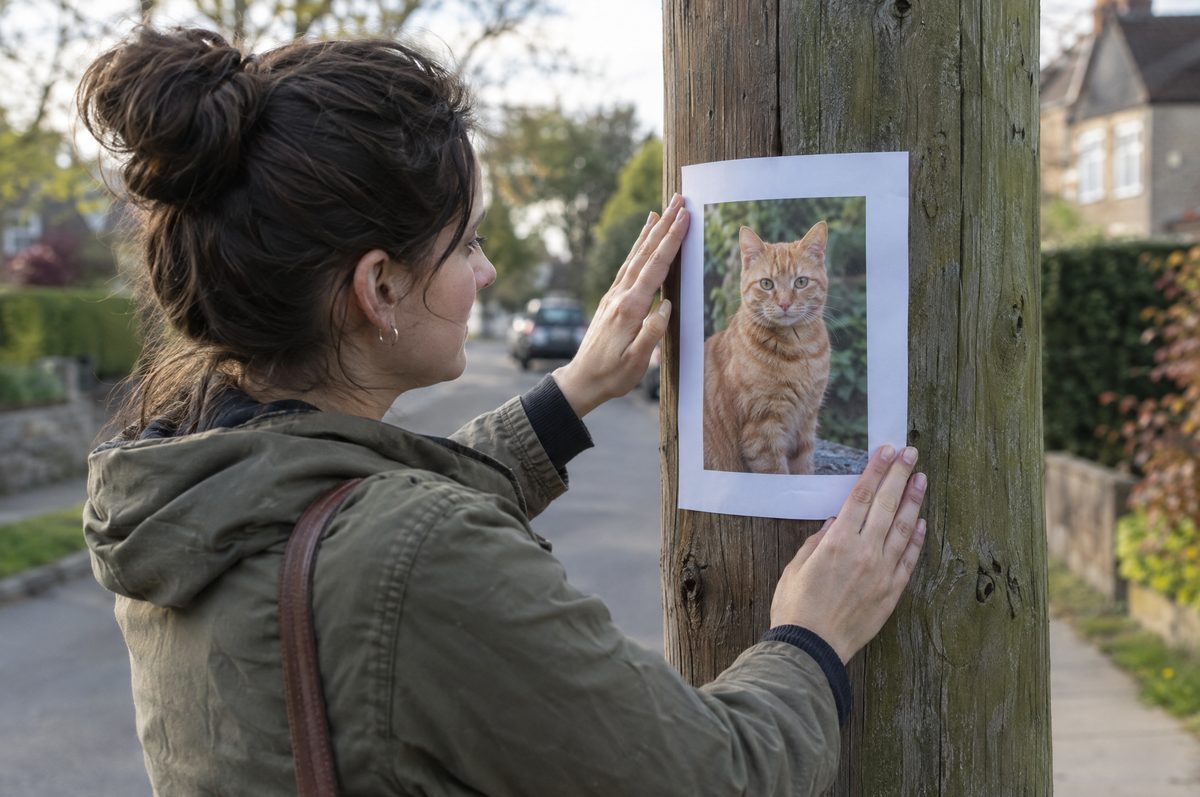
- Lampposts and trees near where your cat went missing.
- Busy shopping and pedestrian areas.
- Places where children pass. The ASPCA says children notice animals.
PetRadar adds communal hallways in apartment blocks, community centres, parks, letterboxes and corner shops. It says to ask permission and to use a method that does not damage the wall or post. Rules on posters differ by place, so check yours.
Protect your flyers. PetRadar suggests waterproof paper or a clear plastic sleeve. Rain turns paper to pulp in a day.
Put out the word online too
A flyer reaches people who walk past. Online posts reach more people. Post the same photo and the same facts. Keep the wording the same, so people link the two.
Also file a lost report with each local shelter, and visit in person. The ASPCA says to check shelters daily with photos for staff. If there is no shelter nearby, it says to contact the police.
Check your cat’s ID
Humane World says a microchip is only as good as the details held by the chip company. It says to update the record as soon as you move or change your phone number. It also says a chip is a back-up, not a replacement for a collar and tag, because a finder needs a scanner to read it.
Call the chip company today. Check that your name and number are right. The ASPCA names 1 July as National ID Your Pet Day, a good date to check every year.
Do not give up
The ASPCA says many lost animals have found their way home. It gives no cut-off date. Replace worn flyers, keep calling shelters and keep looking. Our post on how long a cat can be missing and still come home has the figures from the studies.
A ready-made set of pages
The Lost Cat Kit has a printable flyer page, a search map, a call list for shelters and vets, a daily log and a checklist for each day of the first week. You fill it in once and keep it in one place.
If your dog is the one who is missing, read lost dog: what to do in the first hours.
Questions
What should a lost cat flyer say?
The ASPCA says to use a big, bold headline, such as MISSING CAT, and a clear recent photo. List the breed, sex, colouring, age, weight and any markings. Say when and where the cat was last seen. Add your name and phone numbers.
Should I put my address on a lost cat flyer?
Neither the ASPCA nor PetRadar guidance asks for a home address. Both ask for a phone number. Strangers will see the flyer, so share only what you need. Ask people to call or text with a sighting.
Should I offer a reward?
PetRadar calls a reward optional. The ASPCA flyer list does not mention one. A reward can bring prank calls, so ask callers for a detail that only the finder would know, such as where they saw the cat.
Where should I put lost cat flyers?
The ASPCA names dog parks, pet supply shops, groomers, vet offices, grocery and convenience stores, gas stations, cafes and lampposts near where your cat went missing. PetRadar adds apartment hallways and community centres. Ask permission first.
How long should I keep putting up flyers?
The ASPCA says to act fast and not to give up, and it names no end date. Check shelters every day, keep the flyers fresh and replace any that get wet or torn. Keep going until your cat is home.
Is a microchip enough without a flyer?
No. Humane World says a microchip is only as good as the details on file. A flyer reaches neighbours who may see your cat today. Update your chip details, and do both.
Sources
- ASPCA: Finding a Lost Pet
- PetRadar: How to design a missing cat poster
- Humane World for Animals: Microchips, high-tech identification for lost pets
This article helps you organise care. It does not replace advice from your vet.