Lost dog: what to do in the first hours, step by step
The gate was open, and your dog is gone. Your heart races, and it is hard to think. This page gives you the steps in order, so you can act now and think later.
This guide is one step in our complete guide on what to do if your pet is lost, for owners and for finders.
Most lost dogs come home
A US telephone survey asked 1,015 households about lost pets. In five years, 14% of the dogs were lost at least once. Of those dogs, 93% were found again.
The survey also asked how the dogs were found. The most common ways were a search of the neighbourhood, and the dog coming home on its own. An ID tag brought back 14% of the dogs.
So the first hours matter. Search close to home, make the calls, and make sure people can reach you.
The first hour: search close to home
- Ask everyone in the house where and when they last saw the dog.
- Search inside first. Look under beds, in closets, behind large furniture and in small, dark places.
- Walk or drive slowly around the streets nearby. Call your dog’s name.
- Shake a food bowl, a treat jar or a favourite toy as you go.
- Carry a recent photo on your phone. Show it to the people you meet.
- Look under porches and shrubs. Ask neighbours to check their sheds and garages.
Ask one person to stay at home. Your dog can come back while you search.
Make the calls
Phone these places the same day:
- Animal control
- Every animal shelter near you, both city shelters and private shelters
- Local vet clinics and emergency vet clinics
- Rescue groups in your area
If there is no shelter near you, contact the police.
Then visit the shelters in person, and go back every day. Bring photos for the staff. A phone description is easy to miss. A face is not.
Check the microchip details today
A microchip holds only a number. When a vet or shelter scans the chip, the number leads to the registry. The registry gives them your phone number, but only if your details are current.
- Call the registry and confirm your name, address and phone number.
- Tell them that your dog is lost.
- If you do not know the registry, the AVMA says to use the AAHA Microchip Registry Lookup Tool, or ask your vet.
Make a poster people can read from a car
People see a poster for a second or two. Keep it simple, and use one design for all copies.
- A big, bold headline: LOST DOG
- One clear, recent photo
- Breed, sex, colour, age and weight
- Marks that make your dog different
- When and where your dog was last seen
- Your name and two phone numbers: yours and a friend’s
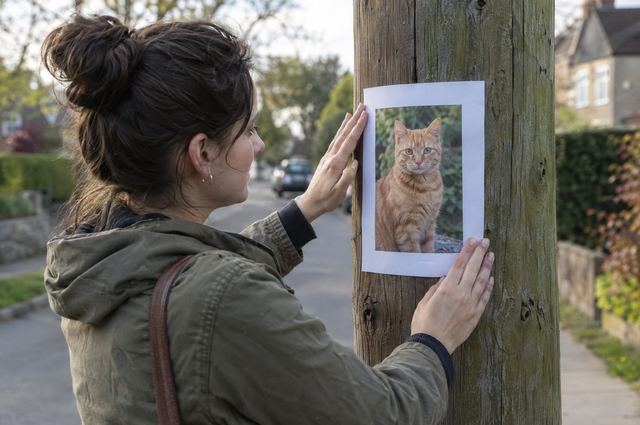
Put posters near the place your dog was lost. Also use dog parks, pet shops, groomers, vet clinics, food shops, fuel stations and laundromats. The ASPCA also suggests posters near schools, at a child’s eye level. Children often notice animals.
Spread the word online
Post the same photo and details on local lost pet pages and on social media. Send an email to friends and neighbours. Ask them to share it.
Get ready before it happens
Most of these steps go faster when the details are ready. Put an ID tag with your current phone number on your dog’s collar. Keep a record of the microchip number and the registry. Take a clear photo of your dog every few months.
The Lost Dog Kit holds all of this in one place. It has an ID, licence and microchip record, a map of your walk routes, a first hours checklist, a LOST DOG poster to fill in, a call list, and logs for each search and each sighting. It also has a page to check callers who say they found your dog.
Not sure the chip has your current details? Read how to check if your dog’s microchip is registered.
Wondering how far your dog may have gone? Read how far lost dogs travel.
Found a dog instead? Read found a stray dog: what to do in the first hour. The poster rules in lost cat flyer: what to put on it, and where to post it also work for a lost dog.
Questions
Should I visit the shelter, or is a phone call enough?
Visit in person. The ASPCA tells owners to check shelters every day and to bring photos of the pet for the staff. Staff may not match a phone description to the dog in front of them.
My dog has a microchip. Is that enough?
No. A microchip holds only a number. The registry must have your current name and phone number. The AVMA also says that a chipped pet should wear a collar with a current ID tag, so anyone can call you without a scanner.
What should a lost dog poster say?
Use a big headline, LOST DOG, and one clear, recent photo. Add the breed, sex, colour, age, weight and any marks. Say when and where the dog was last seen. Give your name and two phone numbers.
When should I update my dog's microchip details?
Update them each time you move house or change your phone number. The AVMA names 15 August as Check the Chip Day, a yearly reminder to check the registry details.
Sources
- ASPCA: Finding a lost pet
- AVMA: Microchips reunite pets with families
- Weiss E, Slater M, Lord L. Frequency of lost dogs and cats in the United States and the methods used to locate them. Animals 2012;2(2):301-315
This article helps you organise care. It does not replace advice from your vet.