How to check if your dog's microchip is registered (and to you)
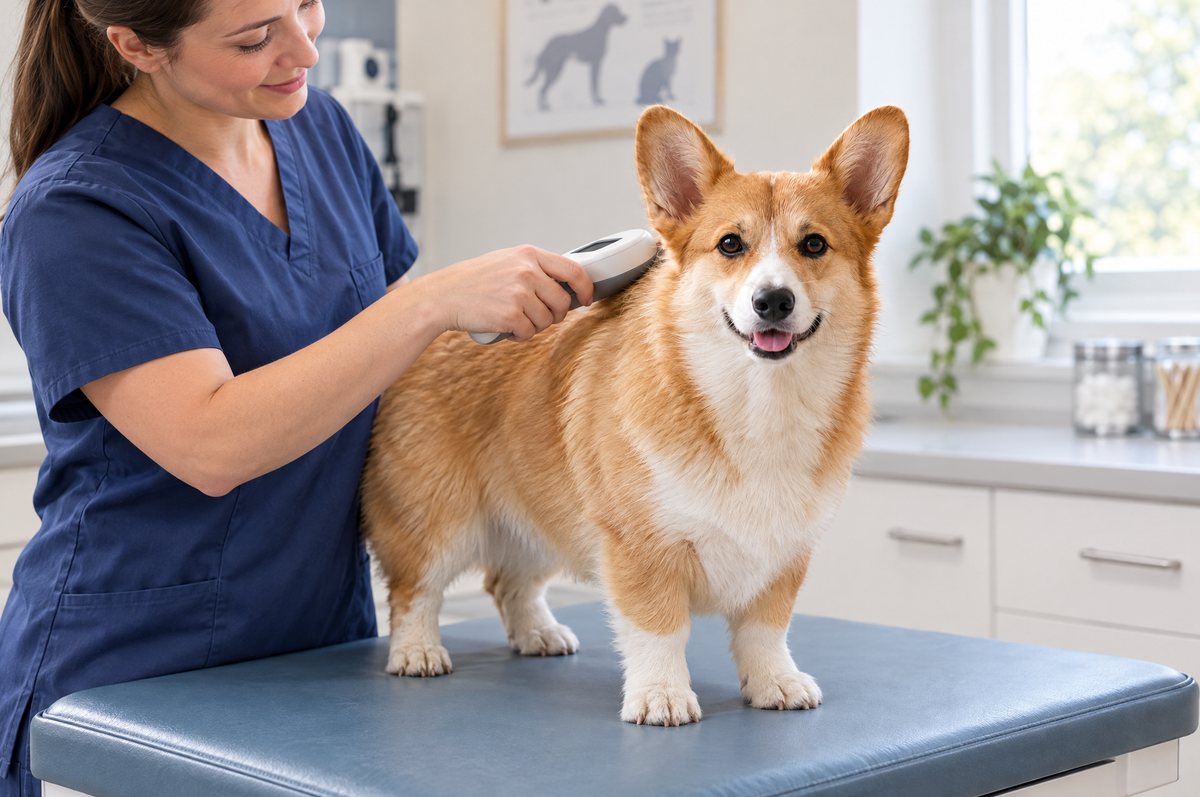
Your dog has a microchip. The shelter or breeder told you so, and you have a sticker somewhere. But is the chip registered, and is it registered to you, at your current phone number? You can check it yourself, and the AAHA lookup is free.
This guide is one step in our complete guide on what to do if your pet is lost, for owners and for finders.
Why the registration matters more than the chip
The American Veterinary Medical Association (AVMA) explains that a microchip holds only a unique ID number. It does not hold your name, your address or your phone number. Those live in a registry database. If the registry has no record, or an old phone number, the chip cannot bring your dog home.
A 2009 study in the Journal of the American Veterinary Medical Association followed 7,704 microchipped animals in 53 US shelters. It found:
- Shelters found the owner for 74.1% of stray dogs with a chip.
- Of the chips that shelters looked up in a registry, only 58.1% were registered.
- The top reason a shelter could not find the owner was a wrong or disconnected phone number (35.4%).
- Next came owners who did not answer calls or letters (24.3%).
- Then chips registered to another group (17.2%), such as a shelter or breeder.
So a chip works well, but only when the record is right.
Step 1: Find your dog’s microchip number
Look in these places first:
- The adoption contract or shelter papers.
- The breeder’s papers.
- Your vet’s records or invoices.
- A small barcode sticker that came with the chip.
The AVMA says a pet microchip number is usually 9, 10 or 15 digits long. Chips that meet the ISO standard use 15 digits.
If you cannot find the number, ask your vet to scan your dog. The AVMA says most clinics have a scanner, and many shelters can scan too. Ask the vet to write the number in your dog’s record.
Step 2: Look up the number on the AAHA tool
Go to the free AAHA Universal Pet Microchip Lookup from the American Animal Hospital Association. Type in the number. The AVMA recommends this tool when you are not sure which registry holds your chip.
The tool tells you which registry or registries have the number. The AVMA notes that it does not show owner contact details, and you cannot update them there. It only points you to the right registry.
If no registry shows the number, the chip may never have been registered. Go to Step 4 and register it.
Step 3: Contact the registry and check the details
Go to the registry website, or call it. Many registries let you search the number or log in to an account. The AVMA says registries can usually be reached online or by phone at any time.
Check every field:
- The owner’s name. Is it you, or the shelter, the breeder or a past owner?
- Phone numbers. Add a mobile number and a second contact.
- Address and email.
- Your dog’s description. Breed, colour, sex and name.
If the chip is still registered to a shelter or breeder, ask them how to transfer it to you. If it is registered to a past owner, ask the registry how to change it. Each registry has its own process.
The AVMA notes that one chip can be in more than one registry. If the AAHA tool lists more than one, check them all.
Step 4: Register or update, then check every year
If the chip is not registered, register it now. The AVMA says you need the chip number, and you may need to create an account. The registry asks for your pet’s details and your contact details. Registries set their own terms, so read them before you pay anything.
Then keep it current:
- Update the registry the same week you move or change your phone number.
- Ask your vet to scan the chip at least once a year, as the AVMA advises, to make sure it still works.
- Use Check the Chip Day, 15 August each year, as a reminder to review your details.
A chip does not replace a collar and tag
The AVMA is clear: a microchip does not replace ID tags. A person who finds your dog can call the number on a tag at once. A chip needs a scanner at a vet clinic or shelter, which may be closed at night.
Keep these on your dog’s collar:
- An ID tag with your mobile number.
- The rabies tag.
- A licence tag, if your town requires one.
Also remember that a microchip is not a GPS tracker. The AVMA says it cannot track your dog. It has no battery and works only when a scanner passes over it.
Write it all down before you need it
If your dog goes missing, you need the chip number, the registry phone number and a good photo at once. Write them down today.
The Lost Dog Kit starts with a “Be ready now” section. It has a record for the ID tag, licence and microchip number with its registry, and a lost dog file with your dog’s photo and description. Then it walks you through the first hours, the calls to animal control and shelters, a LOST DOG poster, and search and sighting logs.
If your dog is missing now, read what to do in the first hours when your dog is lost.
If you find a loose dog and need a scan, read found a stray dog: what to do in the first hour.
Questions
How do I find my dog's microchip number?
Look on the adoption contract, the shelter papers or your vet's records. If you cannot find it, ask your vet to scan your dog. The AVMA says most clinics have a scanner. A US pet microchip number has 9, 10 or 15 digits.
Does the AAHA lookup show my details?
No. The AVMA says the AAHA Microchip Registry Lookup Tool only shows which registry or registries hold the chip. It does not show owner contact details, and you cannot update them there. You contact the registry to check and change your details.
What happens if my dog is microchipped but not registered?
A shelter can read the number, but it cannot find you. In a 2009 study of 53 US shelters, only 58.1% of the chips that shelters looked up were registered in a database. Register the chip in your name as soon as you can.
Is there one central database for US pet microchips?
No. The AVMA says the US has no single central database. Each registry keeps its own records, and one chip can be in more than one registry. That is why the AAHA lookup tool searches the registries that take part.
Can a microchip track my dog with GPS?
No. The AVMA says a pet microchip is not a GPS device and cannot track your dog. It has no battery. It only sends its ID number when a scanner passes over it.
Sources
- AVMA: Microchipping, FAQs for pet owners
- AVMA: Microchips reunite pets with families
- Lord LK, Ingwersen W, Gray JL, Wintz DJ. Characterization of animals with microchips entering animal shelters. J Am Vet Med Assoc 2009;235(2):160-167
This article helps you organise care. It does not replace advice from your vet.